You're sitting at the kitchen table in Kingwood or Humble, phone in hand, trying to decide whether to ask the court for a protective order or a temporary restraining order. Your ex has been blowing up your phone, showing up uninvited, or talking about the kids like they're property to be moved around. The words sound similar, but in Texas they do very different jobs, and picking the wrong one can leave you with paper that doesn't solve the problem.
Here's the short version. A protective order is a safety tool, backed by criminal enforcement. A restraining order, usually a TRO, is a civil case tool that freezes behavior while a lawsuit is pending. If the danger is violence, stalking, or assault, I want you thinking protective order. If the issue is keeping someone from draining accounts, moving the children, or blowing up the status quo during divorce, I want you thinking TRO.
| Issue | Protective Order | Restraining Order / TRO |
|---|---|---|
| Main purpose | Prevent family violence, dating violence, stalking, or sexual assault | Preserve conduct and status quo in a civil case |
| Typical setting | Family violence case or related safety matter | Divorce, custody, or other civil lawsuit |
| Enforcement | Immediate law-enforcement action if violated | Civil court enforcement, usually contempt |
| Duration | Often up to two years, with some lasting for life | Usually 14 days or until the temporary orders hearing |
| Custody impact | Can take priority over conflicting divorce or SAPCR orders | Can affect conduct during the case, but is not the same safety tool |
Why Kingwood Residents Confuse These Two Orders
A mother in Humble walks into my office after a breakup turned ugly. Her ex has sent threatening texts, parked outside her home, and told her he'll “show up whenever he wants.” She wants him to stay away, fast. Then she hears two different phrases, protective order and restraining order, and assumes they're interchangeable. They're not, and that confusion is exactly how people lose time they don't have.
Same language, very different force
In Texas, the words sound alike because both are court orders telling someone to stop doing certain things. But the legal engine underneath them is different. A protective order is built for safety, while a TRO is built to control conduct inside a civil case, like a divorce or custody fight. The Texas State Law Library explains that TROs are issued in an ongoing civil lawsuit under Section 6.501 of the Texas Family Code and Rules 680 through 693a, while protective orders are used to prevent family violence, dating violence, stalking, or related harm. Texas protective order and TRO guidance
That difference matters in Kingwood, Humble, Porter, and Northeast Houston because the wrong filing can leave a family exposed. If you need the police to have something they can act on right away, you're usually talking about a protective order. If you need the court to freeze a spouse from changing accounts, transferring assets, or creating chaos while divorce is pending, you're usually talking about a TRO.
Practical rule: If the problem is personal safety, stop thinking “civil paperwork” and start thinking “enforcement.”
People also confuse them because family-law disputes and safety disputes often happen at the same time. A divorce can include threats, and a violent relationship can also involve property fights. The trick is to separate the core risk from the side issues. Once you do that, the right remedy usually becomes obvious.
What Texas Law Says About Each Order
Texas law draws a firm line between protective orders and temporary restraining orders because they do different jobs. A protective order exists to stop harm tied to family violence, dating violence, stalking, or sexual assault. A TRO exists inside a civil lawsuit and is governed by Section 6.501 of the Texas Family Code and Rules 680 through 693a, which let a judge preserve the status quo while a case moves forward. The Texas State Law Library also explains that a family-case TRO lasts only 14 days or until the temporary orders hearing, whichever is sooner, and it cannot include custody or child support orders. Texas Family Code and protective order overview
The protective order categories Texans use
Texas recognizes three main protective-order types based on family violence, a temporary ex parte protective order, a final protective order, and a magistrate's order of emergency protection. The first two come from the civil court after an application, and the emergency protection order usually comes after an arrest. For Kingwood and Northeast Houston residents, that means the order type depends on the facts, the timing, and whether a criminal case has already started. Protective orders in Kingwood
Who can apply? Family members, household members, dating partners, and in some situations a parent acting for a child. The question is not the label, it is whether the relationship and the conduct fit Texas law. If the facts support family violence or stalking, a protective order is the right tool. If the dispute is mainly about what each spouse can do during litigation, the TRO belongs in the divorce or SAPCR file.
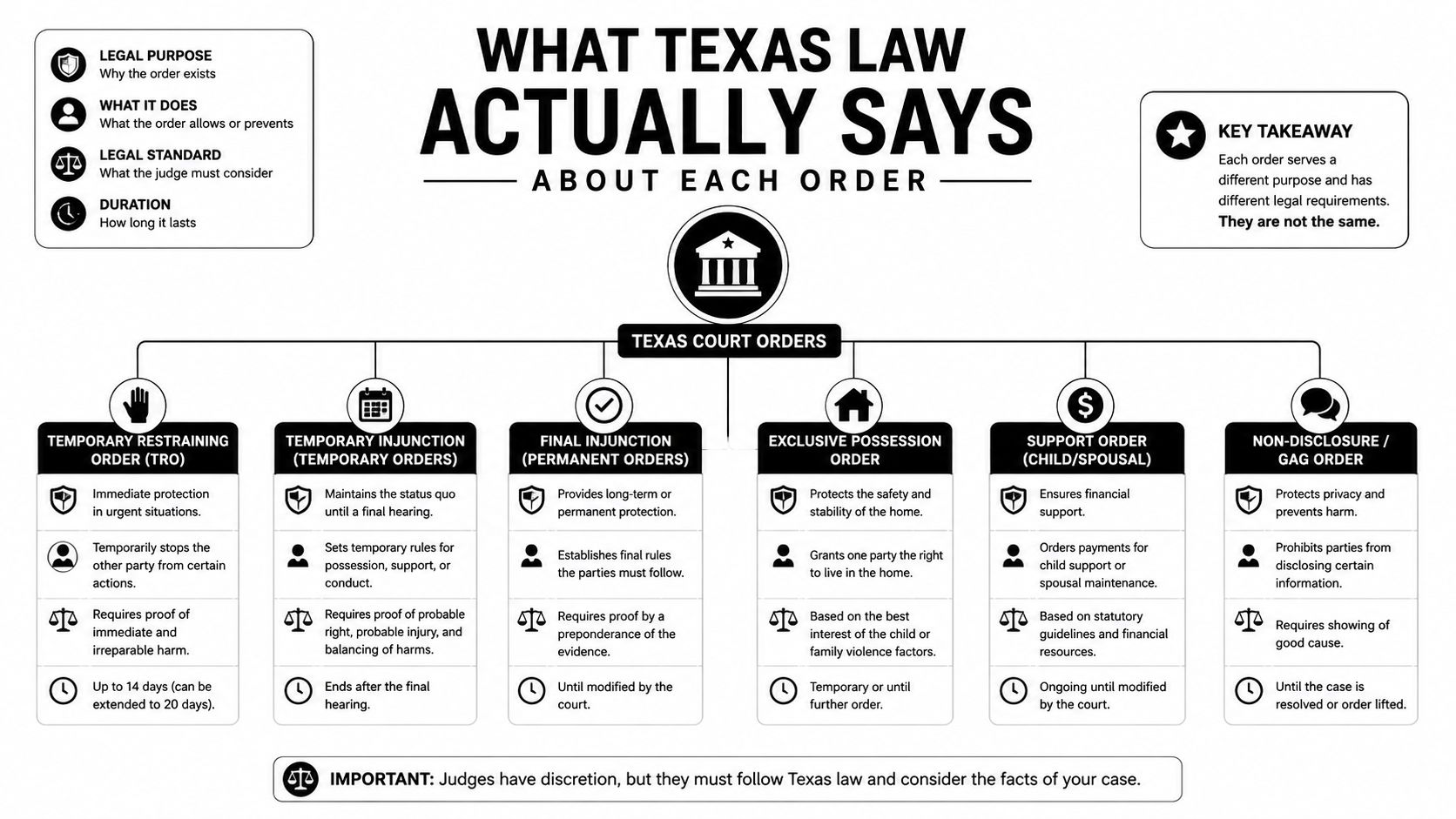
A clean way to read the law is simple. Protective orders are for protection from danger. TROs are for control during litigation. If you mix them up, you end up in the wrong courthouse with the wrong paperwork. For a side-by-side comparison, view search platform comparisons.
Side by Side Comparison of the Two Orders
The clearest way to separate these orders is to put them side by side and look at what each one does in court.
| Criterion | Protective Order | Restraining Order / TRO |
|---|---|---|
| Legal setting | Family violence, dating violence, stalking, or sexual assault matters | Civil lawsuit, often divorce or SAPCR |
| Who can request it | Family member, household member, dating partner, and in some cases a parent for a child | A party to the civil case through their lawyer |
| Typical duration | Often lasts longer, and some orders can last for life in stalking or sexual assault cases | 14 days or until the temporary orders hearing, whichever is sooner |
| What it can prohibit | Contact, proximity, threats, stalking, and other safety-related conduct | Harassment, asset transfers, relocation conduct, and other litigation-related behavior |
| How violations are handled | Direct law enforcement response and criminal penalties | Civil contempt process in the issuing court |
| Can violation lead to arrest | Yes, immediately in many situations | Usually no, enforcement runs through the civil court |
Protective orders are built for safety. They are the right tool when the facts show family violence, stalking, sexual assault, or another serious threat that calls for court-ordered protection. A TRO serves a different purpose. It controls conduct during a civil case and keeps one side from changing the status quo while the judge works through the dispute.
The difference that matters in Harris County is enforcement. A protective order can bring law enforcement into the picture right away. A TRO usually cannot. If someone violates a TRO in a Kingwood divorce, the other side generally has to return to the same family court, file for enforcement, and ask for contempt. That is a real remedy, but it is slower and more procedural, which is why a TRO belongs inside the family case instead of standing alone as a safety order. For the court side of that process, Kingwood family court filing guidance helps put the venue question in the right place.
A protective order lasts according to Texas law and the facts of the case, and some can remain in place far longer than a temporary civil order. A TRO is short by design. It exists only while the lawsuit is moving toward a hearing, so it is the wrong choice if the goal is real-world protection from danger.
If you are comparing options online, use that research to sort the legal category first. I still tell clients to view search platform comparisons only after they understand whether the problem is safety or civil control.
Filing Steps at the Harris County Courthouse
A Kingwood parent who needs immediate protection should file for a protective order where you live, where the respondent lives, or where the violence happened. That filing choice matters in Harris County because it gives you more than one proper place to start, including if you are coming from Kingwood, Humble, Porter, or Northeast Houston. Bring the sworn application, supporting texts, photos, police reports, medical records, and witness names. Then ask for the ex parte hearing so the judge can review temporary protection before the other side shows up.
For family-court venue questions, Kingwood family court filing guidance is the local place to start.
What happens at the courthouse
The judge reads the sworn application first. If the facts show immediate danger, the judge can sign a temporary ex parte order without the other person in the room. After service on the respondent, the case moves to a full hearing on a final order. That sequence exists because safety issues do not wait for a normal civil schedule.
A TRO in a divorce or SAPCR follows a different path. Your lawyer drafts the motion and proposed order, presents them to the court without notice to the other side, and sets the temporary orders hearing inside the short TRO window. A TRO can freeze asset transfers, restrict conduct, and hold the case in place while the judge hears both sides. That belongs inside the family case, because it is a civil control tool, not a standalone safety order.
Fees can arise in both settings, but protective-order applicants in family violence cases often have fee protections, and indigent applicants may seek a waiver. The smart move is to file a clean packet the first time. A local Kingwood attorney's office can help gather the application, organize the evidence, and make sure the filing lands in the right Harris County court. If you want a county-level overview of how the family courts work, the Harris County Family Courts page is a useful local resource.
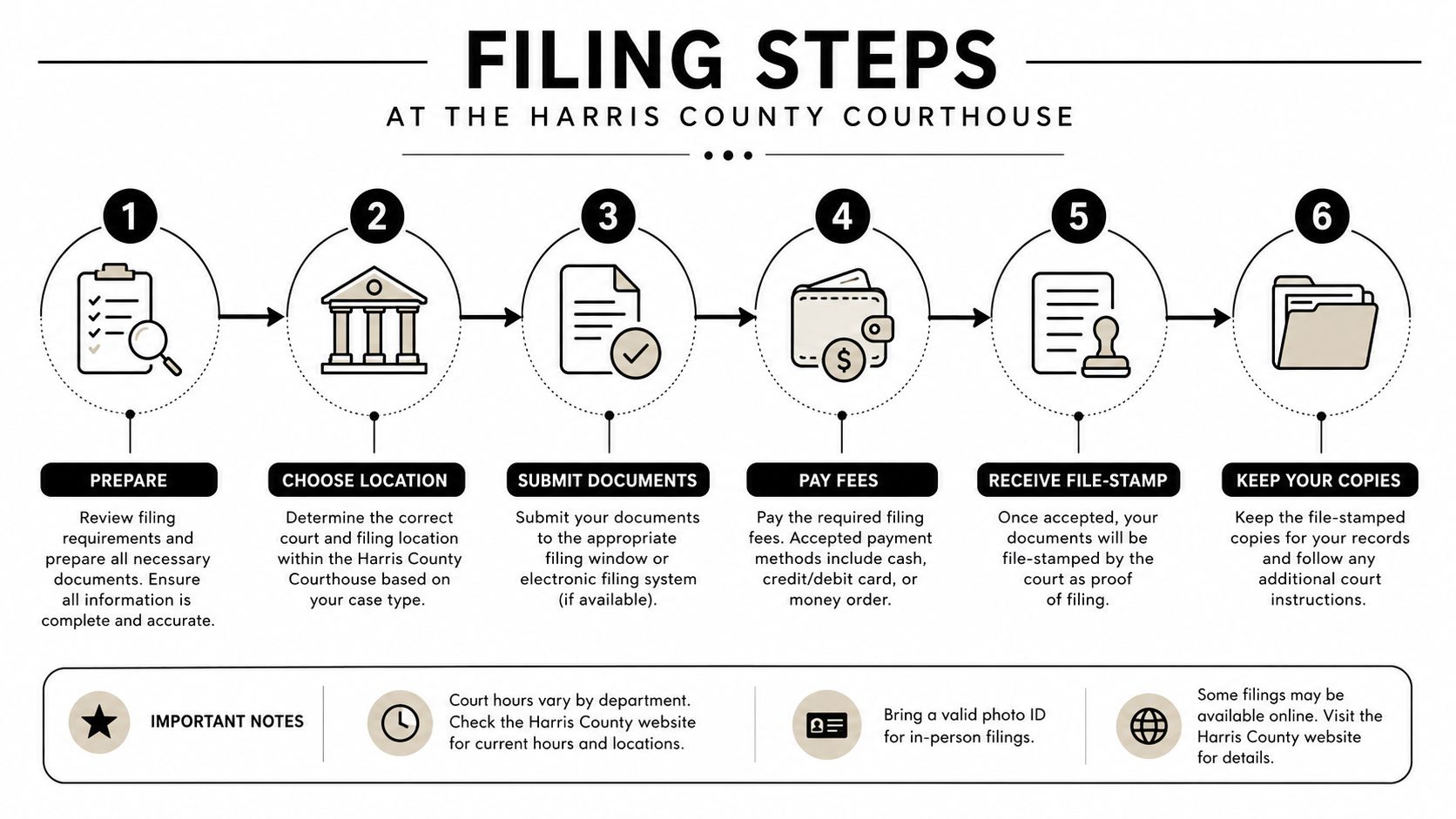
Bring facts, not a story that wanders. Judges respond to dates, screenshots, police calls, and clear patterns of conduct.
If the dispute is a high-conflict divorce, a Contested Divorce Attorney in Kingwood is the right kind of help for the TRO side of the case, because those filings are about preserving the litigation, not just describing fear.
Matching the Right Order to Your Situation
A Humble mother leaves a violent spouse and needs immediate separation backed by law enforcement. She should be pushing for a protective order, not a TRO. The key evidence is the violence, the threats, and the risk of repeat harm. Timing matters too, because she needs something a deputy can enforce immediately if the respondent shows up again.
A Porter couple is in the middle of divorce, and one spouse starts moving money around in a joint business account. That calls for a TRO inside the divorce case. The evidence here is financial, not physical. Bank statements, account access, and records showing transfers matter more than police reports.
A Northeast Houston stalking victim needs durable separation because the conduct keeps going. That is a protective order case. The facts should show a pattern of stalking or threats, and the goal is long-term distance, not just a short pause during litigation.
A Kingwood parent is worried a soon-to-be ex will relocate with the children while the case is pending. If the issue is preserving the children's residence and stopping unilateral moves during litigation, a TRO is the first filing. If the behavior is tied to threats or family violence, the protective-order route may also matter, because Texas gives protective orders priority over conflicting divorce or SAPCR orders. That priority can matter a great deal when custody and safety collide.
For parents dealing with a safety concern and visitation questions, the Kingwood visitation safety guidance is worth reading after you get the core legal strategy straight.
Match the remedy to the evidence
- Violence or stalking: File for a protective order when the problem is danger, not just conflict.
- Asset freezing or relocation prevention: Use a TRO when the goal is to preserve the status quo in a pending case.
- Children's immediate safety: Focus on the order that gives the court the strongest enforcement tools.
- Longer separation: Choose the remedy that matches the duration of the threat, not the emotion of the moment.
The question is never which order sounds tougher. The question is which order fits the facts you can prove.
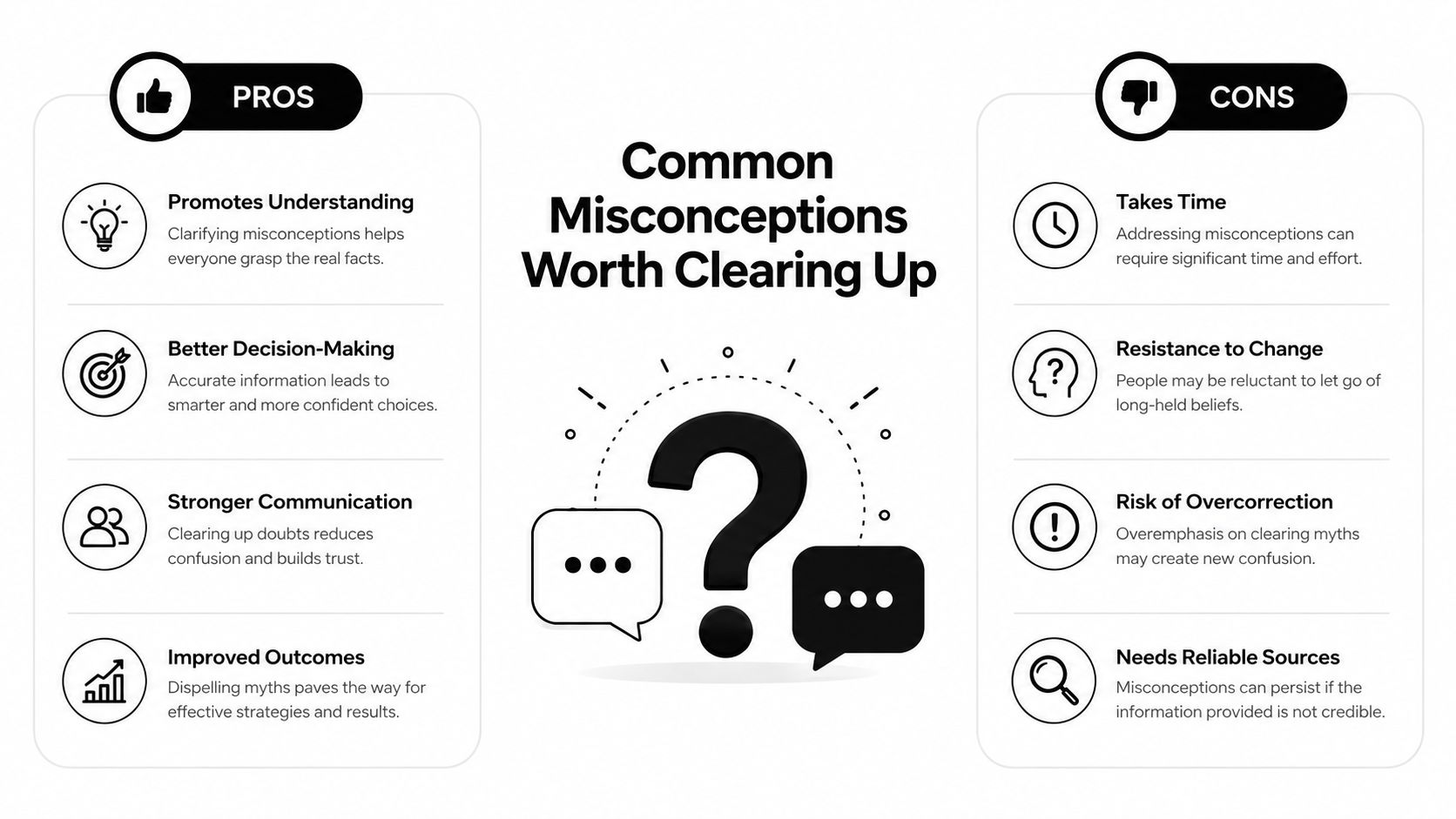
Common Misconceptions Worth Clearing Up
A lot of Kingwood clients walk in with the same three wrong assumptions. The first is that a TRO offers no real protection. That's false. A TRO is a real court order, and it can matter a lot in divorce or custody litigation. It just runs through the civil court's contempt process rather than giving law enforcement the same on-scene arrest authority tied to a protective order. A TRO is useful, just not for the same problem.
The second misconception is that a protective order requires visible injuries. It doesn't. Texas protective orders are tied to family violence, dating violence, stalking, or sexual assault, and those situations can involve threats, intimidation, or a pattern of coercive control, not just bruises. If the conduct makes a person fear harm, the facts may still support protection.
The third mistake is thinking a violation is “only a slap on the wrist.” That's dangerous thinking. Texas sources say a first violation of a protective order is a Class A misdemeanor punishable by up to 1 year in jail and a $4,000 fine, and repeat or weapon-related violations can rise to a third-degree felony. TRO violations are handled differently, but they still carry serious civil consequences. Texas protective order enforcement and penalties
Texas also gives protective orders priority over conflicting divorce or SAPCR orders. That matters when custody and safety overlap, because the safety order can control the conflict. If you're in Kingwood, Humble, or Northeast Houston and the other side is already trying to use court papers to twist the situation, don't assume the newest filing wins. The safety order often has the stronger legal position.
Bottom line: If you ignore the real enforcement difference, you can pick a filing that looks good on paper and still fails where it counts.
Choosing the Right Path with a Kingwood Attorney
A worried spouse walks into my office with screenshots, police reports, and a stack of court papers. The first job is simple. Identify whether the problem is personal safety or litigation conduct. If the threat is physical harm, a protective order is the right tool. If the dispute is about divorce behavior, property control, child-related status quo, or stopping one side from changing the rules mid-case, a TRO is the better fit. File the wrong one, and you waste time while the other side keeps pressing.
The Law Office of Bryan Fagan – Kingwood TX Lawyers handles family law matters, and it also works with order-related issues that can spill into criminal exposure when a violation happens. In a real case, that means reviewing the facts, choosing the proper court, and preparing for both the family-law consequences and the enforcement consequences that can follow. For a local overview of protective-order representation, see Protective Orders in Kingwood, and for enforcement-related help, the firm's restraining order lawyer page is the relevant starting point.
If you're comparing resources online, keep the legal issue separate from the marketing noise. A well-written article can help you understand the basics, but a direct consult is what turns facts into a plan. I'd also point you to practical SEO resources like win more cases with SEO only after the legal strategy is clear, because visibility does nothing if the filing choice is wrong.

If you live in Kingwood, Humble, Porter, or Northeast Houston and you're not sure which order fits, do not guess. Schedule a free consultation with the Law Office of Bryan Fagan – Kingwood TX Lawyers, bring your texts, police reports, court papers, and financial records, and get a plan built around the facts you can prove. Ignore the enforcement difference, and you can walk away with a filing that looks good on paper but fails where it counts.
Quick Answers for Kingwood Readers
How fast can a protective order go into place after the ex parte hearing? Fast enough to matter in an emergency. If the judge signs it, the temporary order can take effect before the full hearing, and service on the other side makes it enforceable.
Does a protective order automatically change custody or visitation in a Kingwood divorce? Not automatically, but it can strongly affect those issues. The judge can enter safety-related parenting terms, and the protective order can take priority over conflicting family-court orders.
What should I do if the respondent violates the order in Kingwood or Humble? Call 911, document the violation, save screenshots or photos, and tell officers you have a court order. Don't argue with the other person or try to handle it privately.
Can the firm help on both the family-law side and the criminal-defense side if an order is violated? Yes, that matters in real cases. Order violations can trigger family-court issues and criminal exposure, so coordinated help is often the smartest move.
If you're trying to decide between a protective order and a TRO in Kingwood, the Law Office of Bryan Fagan – Kingwood TX Lawyers can review the facts, explain the enforcement difference, and help you take the next step without guessing. Visit Law Office of Bryan Fagan – Kingwood TX Lawyers to schedule your free consultation and get clear guidance for your situation.