A spouse in Bear Branch dies unexpectedly, and the surviving daughter assumes she can handle the family home immediately. Then she learns the house is titled only in her father's name. Before she can sell it, refinance it, or make decisions about living there, the court process must establish who has authority to act. For families in Kingwood, Humble, Porter, and Northeast Houston, that surprise is often the moment they start asking how to avoid probate.
The right answer isn't “put everything in a trust.” Probate avoidance is an asset-by-asset decision. A Texas homestead may use one tool, a retirement account another, and a modest estate may need only a simplified affidavit. The plan must match the property, the family, the county records, and the risks created by each transfer method.
Why Texas Families Want to Skip Probate
Probate is the court-supervised process for transferring assets after someone dies. For a Kingwood resident, that generally means filing in the county where the person lived and giving the court a role in confirming authority, identifying property, addressing debts, and approving transfers.
That court involvement can protect a family, but it can also create practical problems. Four concerns usually drive local families to explore avoidance:
- Privacy: Probate filings become public records. People may not want strangers reviewing information about property, debts, or beneficiaries.
- Time: Even a straightforward estate can keep heirs waiting while paperwork, notices, asset searches, and court requirements are completed.
- Cost: Filing fees, attorney fees, appraisals, bonds, publication expenses, and other administration costs can accumulate independently of any tax issue.
- Control: Until the proper representative is recognized, a family member may not have authority to sell, refinance, manage, or distribute property.
Practical rule: Avoiding probate matters only when it improves the overall transfer plan. A shortcut that creates a beneficiary dispute or leaves an important asset exposed can make the family's job harder.
Probate is not a single switch
A will doesn't usually keep individually titled property out of probate. It gives instructions for distributing that property through the probate process. A trust, beneficiary designation, survivorship agreement, or Transfer on Death Deed may control a particular asset outside probate, but only if the document or account registration is completed correctly.
That distinction is especially important for Kingwood homeowners with a homestead, vehicles, bank accounts, retirement funds, life insurance, mineral interests, or business property. One asset may pass directly to a named beneficiary while another remains in the decedent's sole name.
Texas families also need to recognize that probate isn't automatically a failure. It can provide authority, an organized claims process, and court supervision when relatives disagree. The better question is whether each asset should pass through probate or through a coordinated alternative.
Recent reporting indicates that over half of Americans still lack an estate plan, while 31% have a valid will, and many people don't know probate costs or timelines. That same reporting places the average probate timeline at around 20 months, which reinforces the need for clearer, asset-specific planning rather than broad promises about avoiding court. Recent probate and estate-planning data provides the broader context.
What Probate Actually Costs in Texas
Texas probate costs depend on the administration type, the court, the estate's assets, and whether anyone contests the process. An independent administration is commonly described as taking 6 to 12 months, while a contested or dependent administration may take two to three years. Texas doesn't impose a state inheritance or estate tax, but that doesn't make administration free.
Typical expenses can include:
- Court and statutory fees: The estate may pay probate court charges and other required filing expenses.
- County clerk fees: Harris County recording and filing charges may apply to petitions, notices, and documents.
- Attorney fees: Fees may be calculated using the gross estate and applicable Texas fee guidelines.
- Appraisals: Real estate, business interests, mineral rights, and unusual personal property may require valuation.
- Surety bonds: A bond may be required in some administrations, particularly where court supervision is greater.
- Creditor notices: Publishing notice and handling creditor claims adds administrative work and expense.
The statewide comparison is important because probate cost varies sharply by jurisdiction. A 2026 report estimates that probate on a $500,000 estate may cost about $5,000 in Texas compared with about $26,000 in California. Those figures aren't a promise of what any particular Harris County estate will pay, but they show why Texas residents shouldn't copy an avoidance strategy designed for another state. State probate cost and procedure comparisons explain that state law is changing, including small-estate thresholds, Transfer on Death rules, and electronic estate-planning documents.
| Estate Size | Probate Timeline | Typical Court & Attorney Fees | Avoidance Priority |
|---|---|---|---|
| Under $75,000, excluding qualifying property | May qualify for a simplified process | Often lower than full administration, depending on the matter | Evaluate a small-estate affidavit first |
| Ordinary Texas estate | Commonly months, depending on administration and cooperation | Varies with assets, filings, and legal work | Coordinate only the assets that justify planning |
| $500,000 or more | May remain manageable in an independent administration, but complexity can extend the process | Texas probate may reach about $5,000 for a $500,000 estate in the cited comparison | Compare the cost of planning against the assets and family risks |
For a Harris County family, a Probate Lawyer in Kingwood, TX can review the estate's structure and explain whether full probate, a simplified procedure, or targeted planning makes practical sense.
The Five Tools That Move Assets Around Probate
Texas families use several tools to move particular assets outside probate. None is a universal solution, and each depends on correct execution.

Revocable living trusts
A revocable living trust owns property during the creator's life and directs how the trustee handles it after death. It can be useful for real estate, blended families, privacy concerns, and situations where someone needs ongoing management rather than an immediate outright distribution.
The limitation is decisive: signing the trust isn't enough. Assets must be retitled into the trust, or the trust must be named as beneficiary where appropriate. A house left in the owner's sole name can still require probate even when a beautifully drafted trust sits in a desk drawer. Families researching the general mechanics can review this resource on how to make a trust, then obtain Texas-specific advice before transferring property.
Texas Transfer on Death Deeds
Texas has allowed a Transfer on Death Deed since September 1, 2015. The deed lets an owner name a beneficiary for described real property while retaining control during life. It must be recorded in the county deed records before the owner dies. Texas guidance on minimizing probate explains the basic function of this tool.
A TOD Deed can be practical for a Kingwood homestead, but it must be prepared, signed, and recorded correctly. It also needs to fit the owner's family plan, debts, property interests, and future changes.
Beneficiary designations
Life insurance, retirement accounts, and payable-on-death bank accounts generally pass according to their beneficiary forms rather than the will. A living named beneficiary can receive those assets outside probate.
That convenience creates a serious coordination risk. A beneficiary form can override the plan in a will or trust, so keep primary and contingent beneficiaries current. Families can learn more about this issue through beneficiary designations.
Joint ownership with survivorship rights
Joint ownership with a right of survivorship can transfer an account or other property to the surviving owner. It may work for a small account or vehicle where the co-owner is a trusted heir.
Adding someone to ownership also gives that person present rights and exposes the asset to that person's creditors, divorce, financial problems, or poor decisions. It can also complicate Medicaid planning. Don't add a child or relative merely because a bank employee says it is easy.
Lifetime gifting
A lifetime gift removes property from the giver's ownership permanently. That may be appropriate in a carefully designed plan, but it can create loss of control, tax consequences, family imbalance, and eligibility problems for seniors planning around Medicaid.
The tool is not a shortcut for an ordinary Kingwood family. Before giving away a home, mineral interest, investment account, or business share, obtain advice that considers the donor's future care needs and the recipient's financial circumstances.
Building Your Asset-by-Asset Avoidance Plan
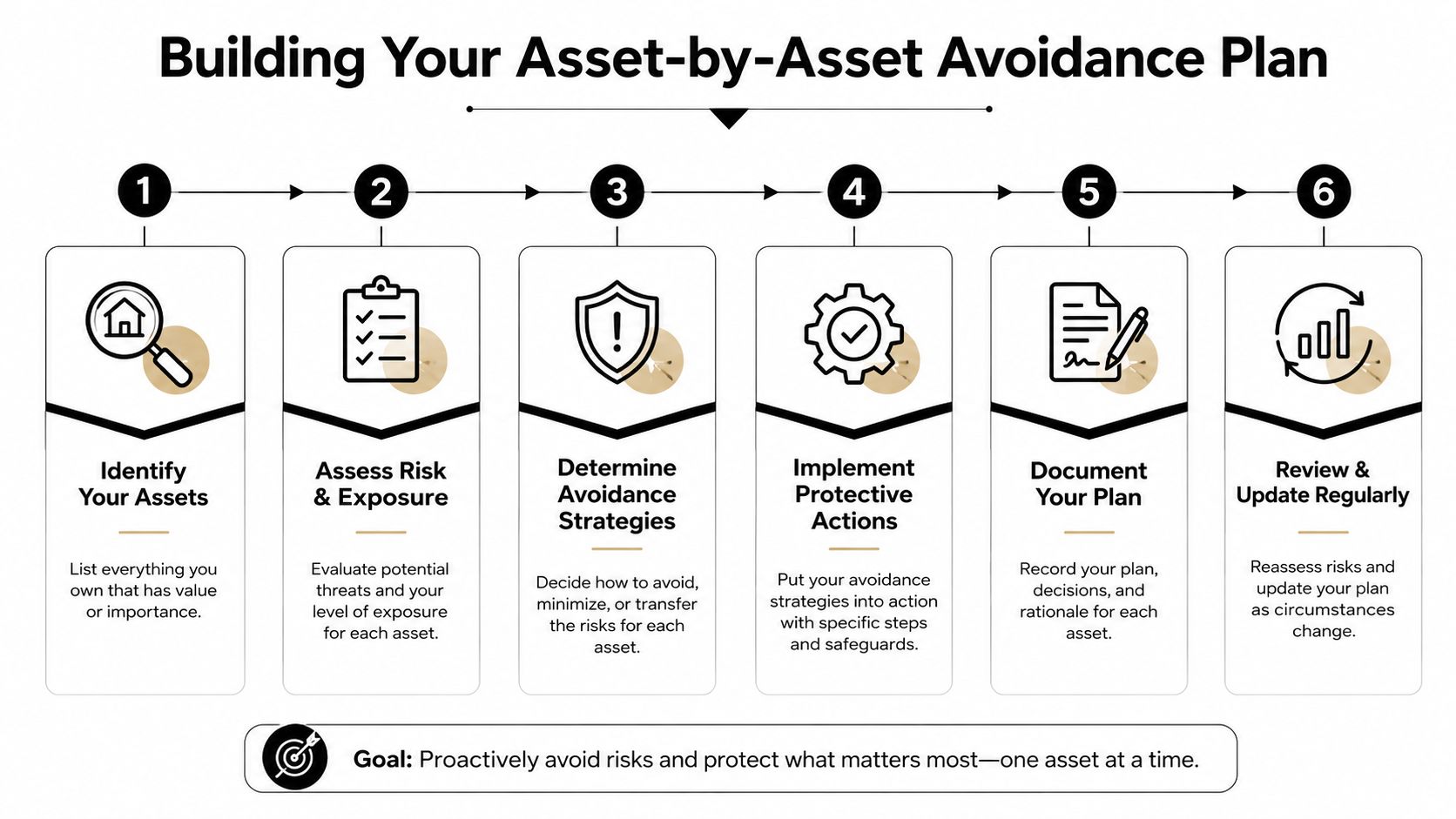
Start with ownership, not paperwork. Create a one-page inventory listing the home, other real estate, mineral rights, vehicles, bank accounts, brokerage accounts, retirement plans, life insurance, business interests, and valuable personal property.
Use a simple column beside each asset: current owner, intended recipient, transfer method, and confirmation completed. Include online and less obvious property when possible. If downsizing or organizing the home is part of the process, an Endless Storage downsizing guide can help the family sort physical property before deciding what should be retained or transferred.
Start with the home
For a Texas homestead, discuss whether a Transfer on Death Deed fits the family's objectives. If it does, prepare and record it in the county deed records while the owner is alive, then keep proof of recording with the estate documents.
A revocable trust may be more suitable when the family needs continuing management, privacy, or detailed instructions for multiple beneficiaries. The choice should follow the property and family circumstances, not a sales pitch for one document.
Move through financial accounts
Ask each bank and brokerage whether the account can use a payable-on-death or transfer-on-death beneficiary. Confirm the institution's form, the primary beneficiary, and every contingent beneficiary.
For retirement accounts, don't casually retitle the account into a trust. Retirement assets generally require separate beneficiary planning, and required distributions still apply. A trust may serve as a contingent beneficiary in an appropriate plan, but the account owner should coordinate that choice with qualified legal and tax advisers.
Handle vehicles and special property
Use the Texas Department of Motor Vehicles transfer-on-death process for vehicles when it fits the circumstances. Treat mineral interests, royalty payments, business interests, and inherited property separately. These assets can have ownership records and transfer requirements that a standard bank beneficiary form won't solve.
Joint ownership belongs only on accounts where every co-owner is trusted and the consequences are understood. It shouldn't be the default for mineral or royalty interests.
Finish by placing deeds, retitling receipts, account confirmations, beneficiary forms, and written instructions in one binder. Review it after major life events and periodically, because an account opened later can undo an otherwise careful plan.
When a Small Estate Affidavit Is the Better Answer
A full trust may be unnecessary when the estate is modest and the heirs cooperate. In Texas, a small estate affidavit may be available when at least 30 days have passed since death, no petition for appointment of a personal representative is pending or has been granted, and the estate's value, excluding homestead and exempt property, is $75,000 or less. Texas Law Help's small-estate guidance identifies these eligibility requirements and the information the affidavit must contain.
The affidavit must address known assets, liabilities, and family-history facts showing heirship. It can be useful for certain bank balances, brokerage funds, vehicles, mineral payments, and small business receivables. Titled real estate requires special care, and every heir may need to sign before a transfer can proceed.
Don't assume a financial institution will accept the form automatically. Ask the bank, brokerage, vehicle office, or other holder what documents it requires before relying on the affidavit.
| Factor | Small Estate Affidavit | Full Probate Administration |
|---|---|---|
| Eligibility | Must meet Texas statutory conditions, including the $75,000 limit after exclusions | Used when the simplified procedure does not apply or is unsuitable |
| Timing | Cannot be used until the required 30-day period has passed | Timing depends on administration type, court requirements, assets, and disputes |
| Information | Lists assets, debts, heirs, and family-history facts | Uses formal pleadings, court authority, notices, and administration records |
| Best fit | Modest estate, no pending representative appointment, and cooperating heirs | Real estate complications, disagreement, larger estates, or unresolved claims |
| Risk | A holder may request additional proof or refuse an incomplete submission | More formal, but provides court-supervised authority and structure |
For a Kingwood family, the Texas small estate affidavit form can be a starting point for understanding the process. Readers comparing state procedures should remember that Texas rules don't apply elsewhere. For example, Arizona probate alternatives address a different state's law and shouldn't be used as a Texas form or checklist.
Common Mistakes That Still Force Probate
Most failed probate-avoidance plans don't fail because the family chose the wrong tool. They fail because someone didn't finish the paperwork or failed to update it.

Five traps to find
- Blank contingent beneficiaries: If the primary beneficiary dies first and no contingent beneficiary is named, the asset may pass to the estate and require probate.
- Sole-name assets: Old certificates of deposit, vehicles, bank accounts, and recently acquired property can remain titled only to the decedent.
- Unrecorded TOD Deeds: A deed that wasn't recorded before death doesn't accomplish the intended transfer. Texas law requires recording before the owner dies.
- Mineral and inherited interests: Mineral rights, royalty checks, and inherited retirement assets may involve records, beneficiary rules, and tax issues that a basic beneficiary form doesn't resolve.
- Family conflict: A dispute can turn a simple transfer into a formal legal matter, even when documents appear complete.
The most common misconception is that a trust document fixes everything. It doesn't. The LLNL estate-planning presentation emphasizes the practical sequence: inventory assets, retitle eligible property, verify each title change, and keep retirement accounts and life insurance on separate beneficiary designations.
Run a regular audit
Pull a current asset list and compare it with every account statement. Confirm that each institution has the intended owner and beneficiary form on file. Check the county deed records for the homestead's recorded Transfer on Death Deed, and keep the recording information with the plan.
Also check for newly purchased property, inherited funds, changed relationships, and beneficiaries who have died or become unable to manage money. One careful review can expose a gap while the owner is alive and able to correct it.
Watch the video below for a visual reminder of the errors that can undermine an estate plan.
Your 30-Day Next Steps and Local Help
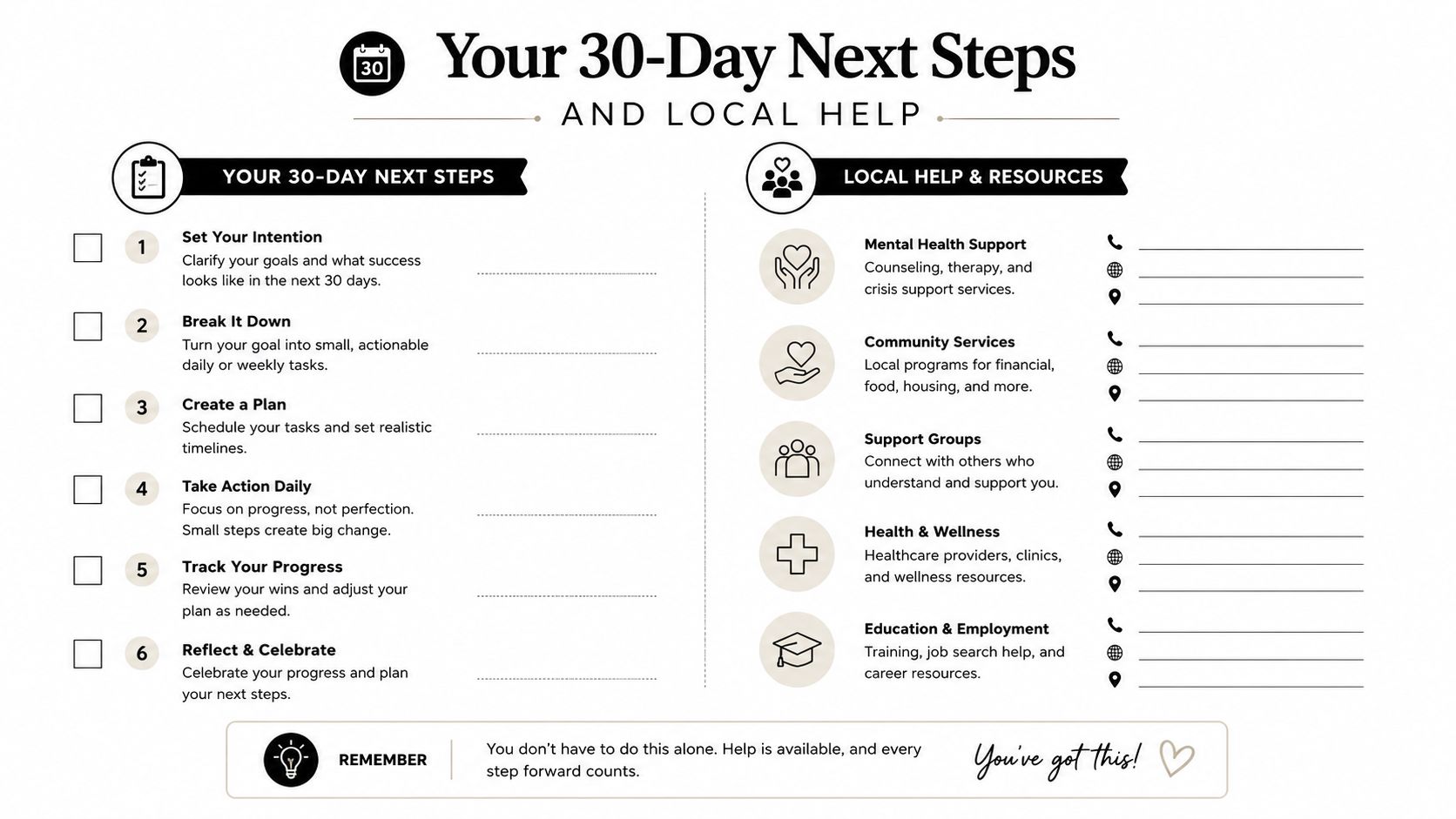
You don't need to solve the entire estate plan in one sitting. Use the next 30 days to turn scattered records into a verified transfer plan.
Week 1, inventory. List every asset and write down the current title, account owner, primary beneficiary, and contingent beneficiary. Include the Kingwood home, vehicles, bank accounts, retirement plans, life insurance, business interests, mineral rights, and meaningful personal property.
Week 2, gather records. Collect deeds, account statements, insurance policies, vehicle titles, trust documents, wills, and beneficiary confirmations. Ask institutions for current copies rather than relying on memory or an old folder.
Week 3, choose the tool. Decide which assets may use a TOD Deed, trust ownership, payable-on-death designation, survivorship ownership, or a small-estate procedure. Don't make a lifetime gift or add a joint owner until you understand the control, creditor, family, and Medicaid consequences.
Week 4, execute and verify. Sign and record the deed when required, complete account forms, retitle trust assets, and save every receipt and confirmation. A document isn't finished until the county or financial institution has accepted and recorded the change.
Local review matters because Harris County procedures and Texas property records affect how documents work in practice. A probate attorney near Kingwood can review your inventory, identify unfunded trust assets, examine beneficiary gaps, and discuss whether a small-estate affidavit is realistic. Bring the inventory and current records to a free consultation at the Kingwood office, and ask directly about trust funding, beneficiary audits, deed recording, and small-estate qualification.
The Law Office of Bryan Fagan, Kingwood TX Lawyers helps Kingwood, Humble, Atascocita, Porter, and Northeast Houston families coordinate wills, trusts, beneficiary designations, deeds, and probate administration. Visit Law Office of Bryan Fagan – Kingwood TX Lawyers to schedule a free consultation and get a practical review of the assets your family owns.